Sunflower Oil for Sale in Syria (Metric Tons): How to Buy Sunflower Oil in Syria Safely and Profitably
Sunflower Oil for Sale in Syria (Metric Tons): How to Buy Sunflower Oil in Syria Safely and Profitably
Sunflower Oil for Sale in Syria (Metric Tons): How to Buy Sunflower Oil in Syria Safely and Profitably
If you want to buy sunflower oil in Syria, you face three questions at once: who can supply real volume, at what quality, and with what paperwork. Sunflower oil is one of the most used cooking oils in the Levant. Households fry with it, restaurants depend on it, and food factories use it as a core ingredient. Yet supply can be uneven, and buyers often meet vague quotes, unclear specifications and long delays.
This guide explains how the sunflower oil for sale market works for Syrian buyers, what to check before you commit to a metric-ton order, and how Eco Edge Company Limited in Tanzania supplies refined, bottled and bulk sunflower oil to importers, distributors and businesses. Read it from top to bottom, or jump to the section that matches your buyer type.
Key Takeaways
- Match the oil grade to the job: refined for frying and retail, cold-pressed for premium and health-focused shelves, crude only for further refining.
- Always ask for a written specification, a certificate of analysis and the batch or lot number before payment.
- Compare offers on a landed-cost basis (product, freight, insurance, port and inland costs), not only the price per metric ton.
- Check sanctions, licensing and banking rules for your route before you sign, because they change over time.
- Buy through a supplier that documents its origin, packaging options and inspection process.
Why Demand to Buy Sunflower Oil in Syria Stays Strong
Cooking oil is a staple. In Syria, it appears in daily home cooking, street food, bakeries, sweets, snack production and canned foods. Because the country has historically relied on imported vegetable oils to cover part of its needs, buyers watch international prices, shipping routes and currency conditions closely.
Sunflower oil holds a special place among vegetable oils because it has a light taste, a pale golden colour and a high smoke point when refined. Many cooks prefer it to heavier oils because it does not overpower the food. That is why searches such as sunflower oil in Syria, sunflower oil price in Syria and sunflower oil suppliers remain common among both consumers and traders.
Main demand drivers
- Household consumption: families buying 1-litre to 5-litre bottles and larger jerrycans.
- Restaurants, hotels and catering: steady weekly demand for fryer oil in 10-litre to 20-litre packs.
- Food manufacturing: snacks, biscuits, sauces, canned goods and ready meals.
- Trading and distribution: wholesalers who buy full containers or tanker loads and sell on to smaller shops.
Who Is This Guide For? Matching Buyer Type to Product
Buyer typeTypical needRecommended formatKey priorityHousehold and retailEveryday cookingBottled refined oil (1L, 2L, 5L)Clean label, sealed packaging, fair shelf priceFood service and HoReCaDeep frying, sautéing10L–20L jerrycans or bag-in-boxFry stability, consistent supplyIndustrial and manufacturingIngredient or process oilFlexitank, IBC or bulk tankerSpecification, COA, traceabilityB2B distributorsResale to shops and restaurantsFull containers in mixed pack sizesMargin, repeat supply, documentation
Understanding Sunflower Oil Types Before You Order
Not every sunflower oil is the same. The label may say only "sunflower oil," but the refining level, oleic content and processing method change how the oil behaves and what it should cost. Review the options on the edible oil product category to see the range Eco Edge offers.
Refined sunflower oil
Refined oil goes through degumming, neutralising, bleaching and deodorising. The result is a neutral, light oil with a long shelf life. It is the most requested grade for frying and general cooking. You can review options such as refined sunflower oil from Tanzania and 25 metric tons of refined sunflower oil for larger orders.
Cold-pressed sunflower oil
Cold-pressed oil is extracted mechanically without added solvents and with limited heat. It keeps more of its natural flavour and colour, so it suits premium retail and health-focused customers. See the cold-pressed sunflower oil and cold-pressed cooking oil pages for details.
Crude sunflower oil
Crude oil is unrefined and is meant for buyers with their own refining plant. It is cheaper per ton, but it needs processing before it is safe and pleasant for consumer use. Refiners can look at crude sunflower oil from Tanzania.
Organic and specialty options
Some buyers want organic or chemical-free extracted oil for niche markets. Ask for supporting certificates, because an "organic" claim without documents is only a marketing word. Relevant listings include bulk organic sunflower oil and chemical-free extracted oil.
GradeBest useShelf appealProcessing needed by buyerRefinedFrying, everyday cooking, food productionNeutral, light, stableNoneCold-pressedPremium retail, dressings, light cookingNatural flavour and colourNoneCrudeRefineries, biodiesel feedstockNot for direct consumer saleFull refiningOrganicNiche and export-oriented retailCertified claimNone
Sunflower Oil for Sale in Metric Tons: What Bulk Buyers Need to Know
When people search for sunflower oil for sale in metric tons, they are usually importers, distributors or manufacturers. Bulk purchasing follows a different logic from retail. You are not comparing shelf prices; you are comparing specification, logistics, payment terms and risk.
Common bulk formats
- Flexitank in a 20-foot container: a single-use liner for liquid cargo, popular for mid-size shipments.
- ISO tank containers: reusable tanks with strong hygiene control.
- IBC totes and drums: useful for smaller industrial lots.
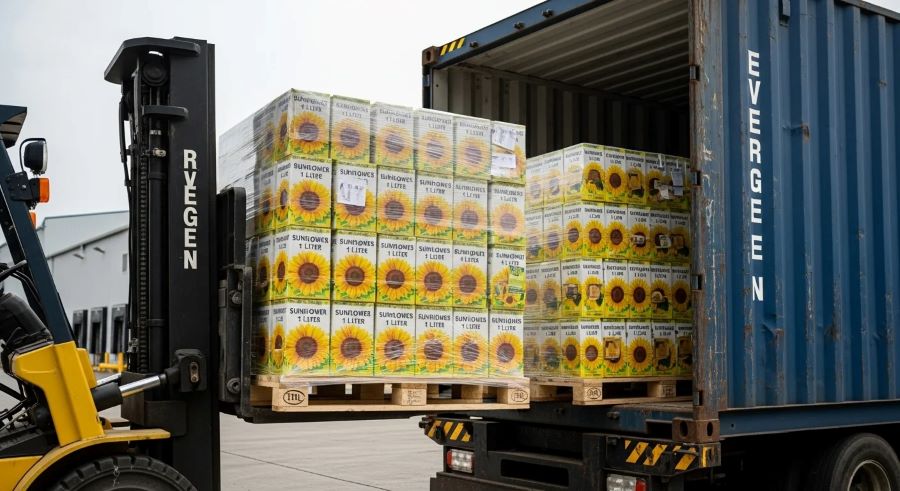
- Palletised bottles or jerrycans: the standard route for distributors who resell to shops.
To explore volume offers, see bulk sunflower oil, bulk sunflower oil supplier in Tanzania and bulk refined sunflower oil from Eco Edge. For a written offer, use the bulk cooking oil quote page.
What to put in a metric-ton enquiry
A precise enquiry gets a precise quote. Include the following details:
- Product grade (refined, cold-pressed, crude or organic).
- Quantity in metric tons and how often you will reorder.
- Packaging type: bulk, jerrycan, or bottles with size and carton count.
- Destination port or delivery point and preferred Incoterm (for example FOB, CFR or CIF).
- Payment method you plan to use.
- Any labelling, language or certificate requirements.
Tip: Ask every supplier to quote on the same Incoterm, packaging and payment terms. Otherwise the price per ton looks comparable, but the total cost is not.
Where Sunflower Oil Comes From: Origin Comparison for Syrian Buyers
Many buyers search for Ukraine sunflower oil manufacturers and sunflower oil producers in Turkey because those countries are long-established in the trade. Black Sea supply has historically been large, and Turkey has its own refining and packing industry. Diversifying origin, however, reduces risk. If one route is disrupted by weather, conflict, port delays or policy changes, a second source keeps your shelves and kitchens supplied.
Tanzania and East Africa are a growing option. The region grows sunflower, and Eco Edge focuses on supplying refined, bottled and bulk oil from Tanzania. You can read more on the Africa sunflower oil for sale page and the wholesale African sunflower oil page.
FactorBlack Sea originTurkey-packedTanzania / East AfricaMarket maturityVery establishedEstablished regional hubGrowing, diversifying optionRoute riskCan be affected by regional eventsShort route to the LevantLonger sea route via Indian Ocean and Red Sea or Suez routesBest reason to chooseDeep supplier poolSpeed and proximitySupply diversification
Shipping times and costs change with freight markets, so ask for a current quote rather than relying on any table, including this one.
How to Evaluate a Sunflower Oil Supplier
A sunflower oil supplier is not only a price. It is a partner whose mistakes become your losses. Use this checklist before placing a first order.
Documents to request
- Product specification sheet with acid value, peroxide value, moisture and colour.
- Certificate of analysis for the specific lot.
- Certificate of origin.
- Food safety credentials such as ISO 22000, HACCP or equivalent. See certified sunflower oil supplier (ISO, HACCP) for what Eco Edge lists.
- Phytosanitary or health certificate where the importing authority requires it.
- Bill of lading, packing list and commercial invoice at shipment.
Quality benchmarks
Food-grade vegetable oils are commonly assessed against international standards such as the Codex Alimentarius standard for named vegetable oils. Ask your supplier which standard applies, and ask for test results that you can send to an independent laboratory or inspection company for verification.
Red flags
- A price far below the market with no explanation.
- Pressure to pay 100% in advance to an unfamiliar account.
- Refusal to allow third-party inspection.
- No lot number, no laboratory report, or a report that is not linked to your batch.
- Unclear company registration or no verifiable contact details.
Compliance notice: Trade with Syria is subject to sanctions, export licensing and banking rules that differ by country and change over time. Foodstuffs are often treated differently from other goods, but you should confirm your exact route with a customs broker, a bank and legal counsel. Official starting points include the U.S. Treasury OFAC website and the EU Sanctions Map. Eco Edge does not replace professional compliance advice.
Sunflower Oil Price in Syria: What Really Drives the Cost
Searchers often type sunflower oil price in Syria, but no honest article can give one fixed figure. Prices move daily. Instead, understand the drivers so you can judge any quote.
- Global vegetable oil markets: harvest size, demand from biofuel, and competing oils such as palm and soybean.
- Freight and insurance: container rates and war-risk or route surcharges.
- Packaging: bulk is cheaper than bottled; PET bottles, caps, labels and cartons add cost.
- Grade and processing: cold-pressed and organic cost more than standard refined.
- Currency and payment method: exchange-rate movement and banking fees.
- Duties, port charges and inland transport: often forgotten in early comparisons.
For a current B2B figure, request the B2B vegetable oil price from Eco Edge, stating your grade, volume and delivery point.
Buying Sunflower Oil in Syria: A Step-by-Step Process
This numbered process works for a first import order and is designed to reduce risk.
- Define your need. Decide grade, volume, packaging and target customer.
- Check your legal route. Confirm import rules, sanctions status, licences and bank acceptance.
- Request quotes. Ask two or three suppliers for offers on the same terms.
- Review documents. Compare specifications, certificates and food-safety credentials.
- Order a sample. Test taste, colour, odour and lab values before you commit.
- Agree payment and inspection terms. Consider a secure payment method and independent pre-shipment inspection.
- Confirm shipping details. Lock the Incoterm, port, transit time and insurance.
- Receive and verify. Check seals, weight, labels and lot numbers on arrival, and keep retention samples.
- Plan the reorder. Agree a repeat schedule so supply never runs dry.
Sunflower Oil for Household and Retail Consumers
Retailers and supermarkets in Syria need oil that looks clean, pours easily and does not go rancid on the shelf. For this audience, bottled refined oil is the priority. Look at the bottled sunflower oil from Tanzania and 100% pure sunflower oil listings.
What retail buyers should check
- Sealed tamper-evident caps and sturdy bottles.
- Arabic labelling with ingredients, production and expiry dates, and storage guidance, as required locally.
- Consistent colour and clarity across batches.
- Carton and pallet sizes that fit your warehouse and shop shelves.
Sunflower Oil for Restaurants, Hotels and Catering (HoReCa)
A busy kitchen cares about fry life, foaming, smell and cost per portion. Refined sunflower oil handles high heat well, but oil that is overheated or reused too long will darken and produce off flavours. For commercial kitchens, see commercial frying oil and buy cooking oil in bulk.
Kitchen tips to extend oil life
- Keep fryer temperature steady and avoid overheating.
- Filter oil daily and remove food particles.
- Salt food away from the fryer, not over it.
- Track colour, smell and total polar material where you have a test meter.
- Store unused oil sealed, cool and away from light.
Sunflower Oil for Industrial and Manufacturing Users
Snack makers, bakeries and canneries need oil that behaves the same in every batch. That means stable specification, documented lot data and reliable delivery windows. Factories may also consider blends or alternatives; Eco Edge lists products such as refined corn oil, refined rapeseed oil and peanut oil for comparison. Non-food users can also ask about biodiesel feedstock oil.
Industrial buyers should agree on maximum acid value, peroxide value, moisture and impurities in the contract, plus a clear claims procedure if a delivery fails the agreed limits.
B2B Distribution Strategy: Building a Profitable Sunflower Oil Business
Distributors earn on volume and reliability. A sound strategy looks like this:
- Segment your customers. Serve retail shops with bottles and restaurants with jerrycans.
- Keep a safety stock. Hold enough inventory to cover shipping delays.
- Use two suppliers. A primary partner and a backup lower supply risk.
- Standardise pack sizes. Fewer SKUs mean simpler stock control.
- Protect quality in storage. Keep warehouses cool, dry and out of direct sun.
- Record batch numbers. Traceability protects you if a customer raises a complaint.
Distributors interested in a long-term contract can start with the bulk cooking oil supplier page and the guides on buying sunflower oil from Tanzania and bulk African sunflower oil from Tanzania.
Storage, Handling and Shelf Life
Even excellent oil spoils when stored badly. Heat, light and air speed up oxidation, which causes rancid smells and lowers quality.
- Store in a cool, dry place away from direct sunlight.
- Keep containers tightly closed once opened.
- Use first-in, first-out stock rotation.
- Do not store oil next to strong-smelling goods or chemicals.
- Follow the best-before date printed on the packaging.
Health Facts: Is Sunflower Oil Good or Bad for You?
Consumers often ask why sunflower oil is not healthy or why sunflower oil is so bad for you. The honest answer is more balanced than either headline suggests.
Sunflower oil is mostly unsaturated fat, and it is a source of vitamin E. Health bodies generally advise replacing saturated fats with unsaturated fats within an overall balanced diet; see the World Health Organization healthy diet fact sheet and the Harvard T.H. Chan School of Public Health Nutrition Source. Conventional sunflower oil is high in omega-6 linoleic acid, and some people prefer high-oleic varieties for frying because they are more stable at heat. Total quantity, cooking method and the rest of the diet matter more than any single oil. Nutrient data is available in USDA FoodData Central.
Note: This article gives general information and is not medical advice. People with specific health conditions should ask a doctor or dietitian.
How Sunflower Oil Is Made from Sunflower Seeds
People often ask how we get sunflower oil from sunflower seeds. Here is the industrial process in simple steps.
- Harvest and drying: mature seed heads are harvested and the seeds are dried to safe moisture.
- Cleaning: stones, dust and plant matter are removed.
- Dehulling (optional): some plants remove part of the hull to improve oil quality.
- Pressing: screw presses squeeze out crude oil. Cold pressing uses low temperature and no solvent.
- Solvent extraction (industrial scale): remaining oil in the press cake may be recovered with food-grade solvent.
- Refining: degumming, neutralising, bleaching and deodorising produce a clear, neutral oil.
- Filtration and packing: the oil is filtered, tested and filled into bottles, drums or tanks.
At home, a small oil press can extract oil from clean, dry sunflower seeds, but yields are small and it is not a practical way to supply a business.
Expert Insights
The cheapest offer is rarely the cheapest oil. A single rejected container costs more than the small price gap you saved by skipping documents and inspection.
Eco Edge trade desk perspective
- Sample first, scale second. Start with a sample and a small trial order, then move to full metric-ton volumes.
- Test on arrival. Keep a sealed retention sample from every lot.
- Diversify origin. Two supply routes protect you from single-point failure.
- Write everything down. Specification, tolerances, delivery date and claims terms belong in the contract.
Common Mistakes When You Buy Sunflower Oil in Syria
- Comparing price per ton without comparing Incoterms and packaging.
- Skipping laboratory results and lot numbers.
- Paying the full amount upfront to an unverified company.
- Ignoring sanctions, licence and banking questions until the goods are already booked.
- Choosing the wrong grade, such as crude oil for direct consumer sale.
- Storing oil in hot or sunny warehouses.
- Relying on one supplier and one shipping route.
Best Practices for Long-Term Supply
- Set a written specification and review it every year.
- Use independent inspection for every large shipment.
- Negotiate a repeat-order schedule and price review mechanism.
- Keep two to four weeks of safety stock when logistics are unpredictable.
- Train staff on receiving checks: seals, labels, weight, colour and smell.
- Keep records of certificates, invoices and lot numbers for every delivery.
Related Questions: Kosher Status, Substitutes and Regional Search Terms
Buyers across the region often search for related terms such as sunflower oil in Iraq, sunflower oil producers in Libya, cooking oil in Israel or the Hebrew name for sunflower oil. These searches show how connected the regional edible-oil trade is. Whichever market you serve, the same rules apply: verify specification, documents, legal route and payment safety.
Kosher: sunflower oil comes from a plant, so it is generally considered kosher in principle. Formal kosher status depends on the processing facility and certification, so buyers who need it should ask for a valid kosher certificate for the specific product.
Closest substitutes: refined corn oil, safflower oil and canola or rapeseed oil are the closest in taste and function. High-oleic sunflower oil is also a near match for frying.
Frequently Asked Questions
1. How can I buy sunflower oil in Syria?
Define your grade, volume and packaging, confirm the legal and banking route, request quotes from verified suppliers, test a sample, and then place an order with agreed inspection and payment terms. Eco Edge accepts enquiries through its website.
2. What is the minimum order for sunflower oil by the metric ton?
Minimums depend on packaging and shipping method. A full container is common for export, while smaller lots may be available in drums, IBCs or pallets. Ask for the current minimum in your quote.
3. Who is the best sunflower oil supplier for Syrian buyers?
The best supplier is the one that can show a clear specification, lot-level laboratory results, verifiable company details, workable payment terms and consistent delivery. Compare at least two.
4. What is the price of sunflower oil in Syria?
Prices change often and depend on grade, packaging, freight, currency and duties. Request a written quote for your exact order and compare landed cost, not just the ex-works price.
5. What is the difference between refined and cold-pressed sunflower oil?
Refined oil is processed for a neutral taste, light colour and long shelf life. Cold-pressed oil is mechanically extracted at low heat and keeps more natural flavour and colour.
6. Is sunflower oil kosher?
It is plant-based, so it is generally acceptable in principle, but certified kosher status depends on the production facility. Ask for a valid certificate if you need it.
7. Why do some people say sunflower oil is unhealthy?
Concerns focus on omega-6 content and on reheated, overused frying oil. Used in moderation within a balanced diet, and not overheated, it is a common cooking oil. See the WHO and Harvard resources above for guidance.
8. What oil is closest to sunflower oil?
Safflower, corn and canola (rapeseed) oils are close in taste and cooking behaviour. High-oleic sunflower oil is a very close match for frying.
9. How is sunflower oil made from sunflower seeds?
Seeds are cleaned, optionally dehulled, pressed, sometimes solvent-extracted, and then refined, filtered and packed. Cold-pressed oil skips solvent extraction and heavy refining.
10. What documents should come with a sunflower oil shipment?
Commercial invoice, packing list, bill of lading, certificate of origin, certificate of analysis, and any health or phytosanitary certificate your authority requires.
11. Which packaging is best for restaurants?
Most restaurants use 10-litre to 20-litre jerrycans or bag-in-box formats because they reduce handling and cost per litre.
12. How should I store sunflower oil?
Keep it cool, dark and tightly sealed, rotate stock first-in first-out, and respect the best-before date.
13. Can I trade sunflower oil with Syria legally?
Rules depend on the countries, banks and goods involved and they change. Confirm with your customs broker, bank and legal advisor before shipment.
Conclusion: Get a Reliable Sunflower Oil Supply Plan for Syria
To buy sunflower oil in Syria with confidence, focus on the fundamentals: the right grade, a written specification, verified documents, a lawful and bankable route, and a supplier who answers questions clearly. Whether you run a shop, a restaurant, a factory or a distribution company, a disciplined buying process protects your margin and your customers.
Request Your Sunflower Oil Quote from Eco Edge Tanzania
Tell us the grade, quantity in metric tons, packaging and delivery point, and our team will respond with a written offer. Email info@ecoedgecompanylimited.org or visit ecoedgecompanylimited.org.